For this course, I watched a documentary called “Chinese Heroes, Kings and Destroyers” and read the introduction of Pre-Industrial Societies: Anatomy of the Pre-Modern World.
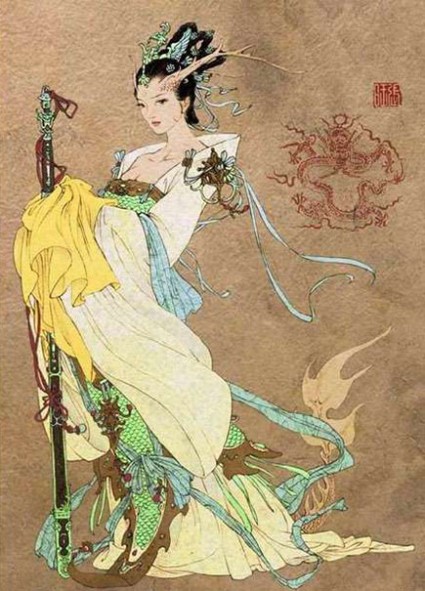
The documentary covers ancient Chinese myths that have been passed down to this day. These include Nu-Gua who is pictured above, Fu-Xi, and the Great Sage Kings. While these characters may simply be legends (though there are arguments that the Great Sage Kings may be real), they reflect the beliefs of the people at the time.
There are many themes that run through the myths in the documentary. Most notably are themes of sacrifice and family, though those ideas can go against each other. This is shown in the case of Yu the Great, where he had to sacrifice seeing his family in order to stop the Great Flood.
The book, Pre-Industrial Societies: Anatomy of the Pre-Modern World, talks about what makes a “civilized” society through a thought experiment: What if you and a group of people were shipwrecked on a deserted island? Inevitably, you would need leaders to keep things together, trading if the large group split off into smaller sections, and things would get more complex until a “civilized society formed.
There was one sentence that stood out to me in the reading. It mentioned that the thought experiment falls apart when religion is thrown into the mix. The sentence made me think about if it was possible for a society to be built without religion. There are multiple definitions for religion, but I’m talking about the idea of worshiping some kind of God. It’s interesting to wonder if some kind of otherworldly and idealized figure is necessary for a society to develop. Do people need an idealized figure to take inspiration from and try to match or would they have the motivation to innovate without any Gods?
Next week I will pay extra attention to the readings in order to come up with ideas for my project. I will also create a thorough calendar to stay on top of all of my assignments
